Fitment guide
BFGoodrich Tires: build a useful specification
Gather the details below before requesting options. Final suitability requires the vehicle and product information to be checked together.
Fitment guide
Gather the details below before requesting options. Final suitability requires the vehicle and product information to be checked together.
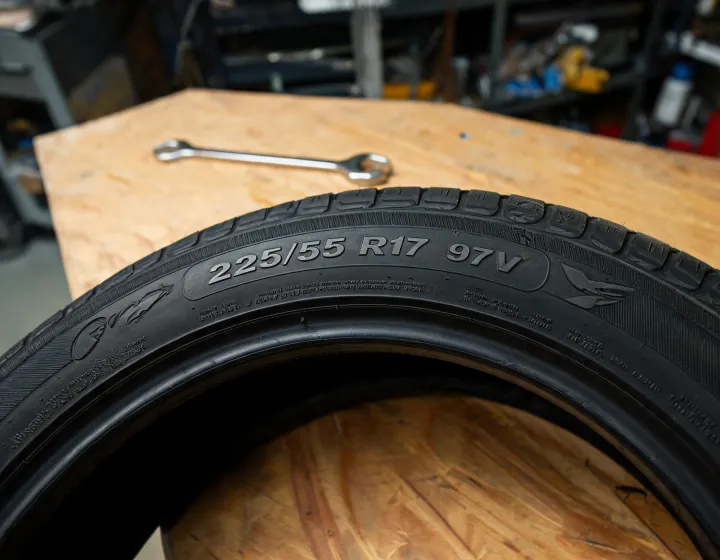
A complete tire designation includes more than the wheel diameter. Record the full sidewall marking, then compare it with the vehicle manufacturer guidance. For a replacement program, repeat this process for each vehicle and axle group.
| Input | What to record | Why it matters |
|---|---|---|
| Vehicle | Make, model, year, VIN or platform and axle | Defines the application to review. |
| Tire size | Complete sidewall size and construction | Supports dimensional comparison with approved fitments. |
| Wheel | Rim diameter and width | Must fall within the tire manufacturer's approved range. |
| Load and speed | Required load index and speed rating | Helps establish the operating envelope. |
| Duty | Surface, climate, axle position and usage | Frames tread and construction trade-offs. |
| Order | Quantity, destination and required evidence | Clarifies the commercial and documentation request. |
Radial and bias-ply construction can suit different duty cycles: compare the manufacturer’s load and inflation guidance, terrain and expected service conditions for the exact sizes under consideration. Lower rolling resistance may involve trade-offs with wet grip or wear; compare documented results measured under comparable conditions rather than assuming one tire leads on every measure. For off-road or specialty tires, add the machine type, operating load, terrain and road transitions. For fleet use, a replacement schedule and service locations add context. Do not assume a tire is universally compatible because its diameter appears to match.
Standards and approvals have specific scopes. A management-system certificate is different from a product approval, and a marking required in one market may not address another. Ask for the evidence relevant to your exact product and destination.
Share them with your request for a more focused discussion.
Send your fitment request